Context

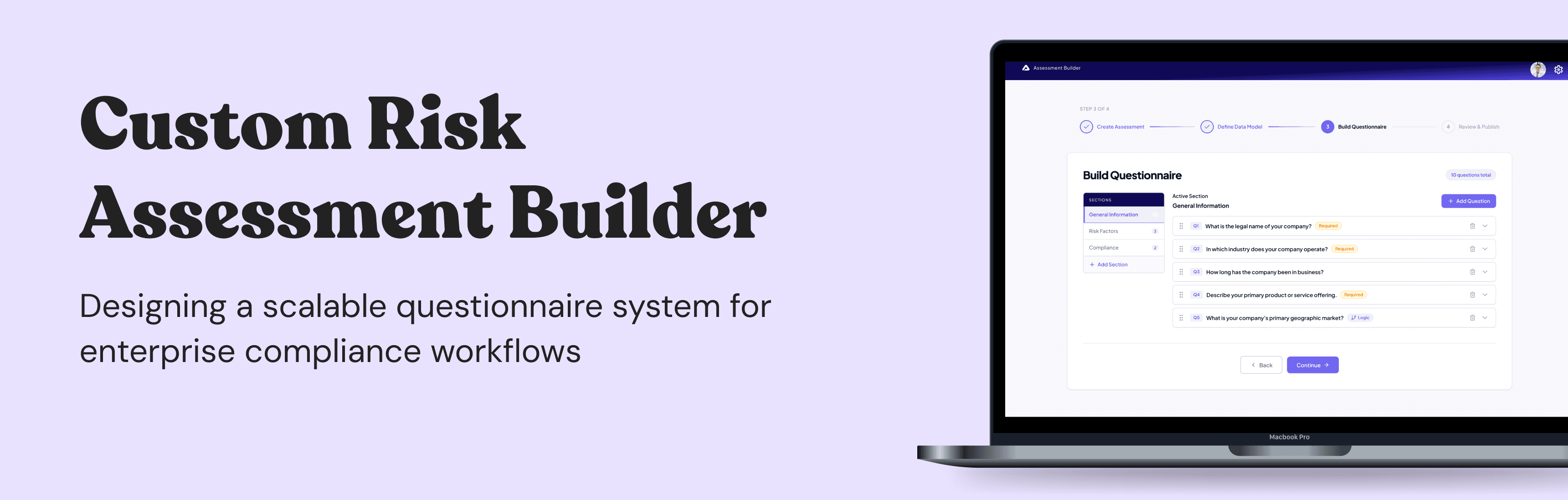
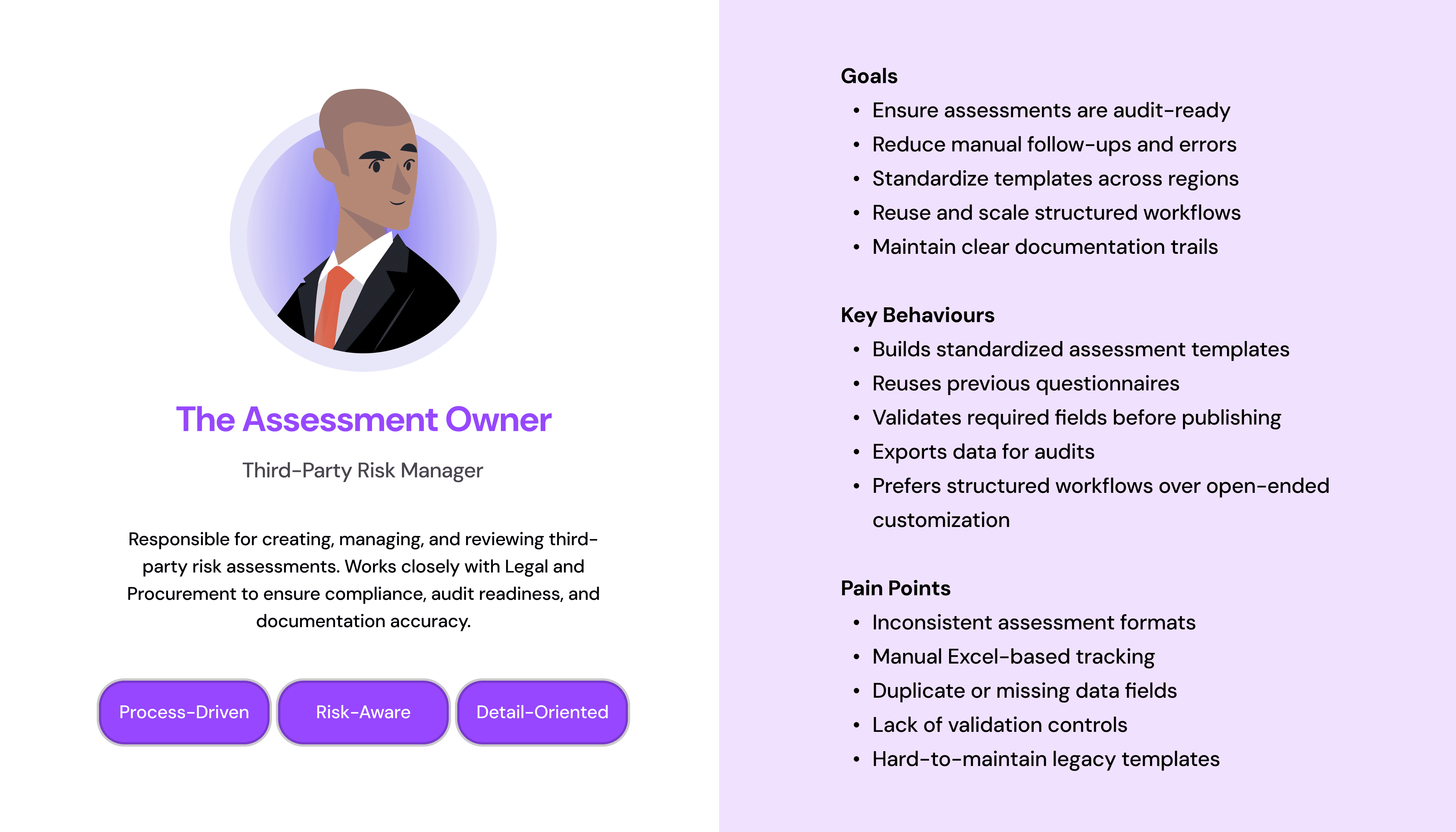
At Blue Umbrella, compliance managers relied on static templates and manual workflows to create third-party risk assessments. As the client base grew across industries and geographies, the lack of configurability created operational bottlenecks, inconsistent evaluations, and increased review time. The organization needed a scalable way to allow compliance teams to build dynamic assessments without engineering support.

Date

July 23, 2021

Role

UX Designer

Client

Blue Umbrella

Tools

Figma

Goal

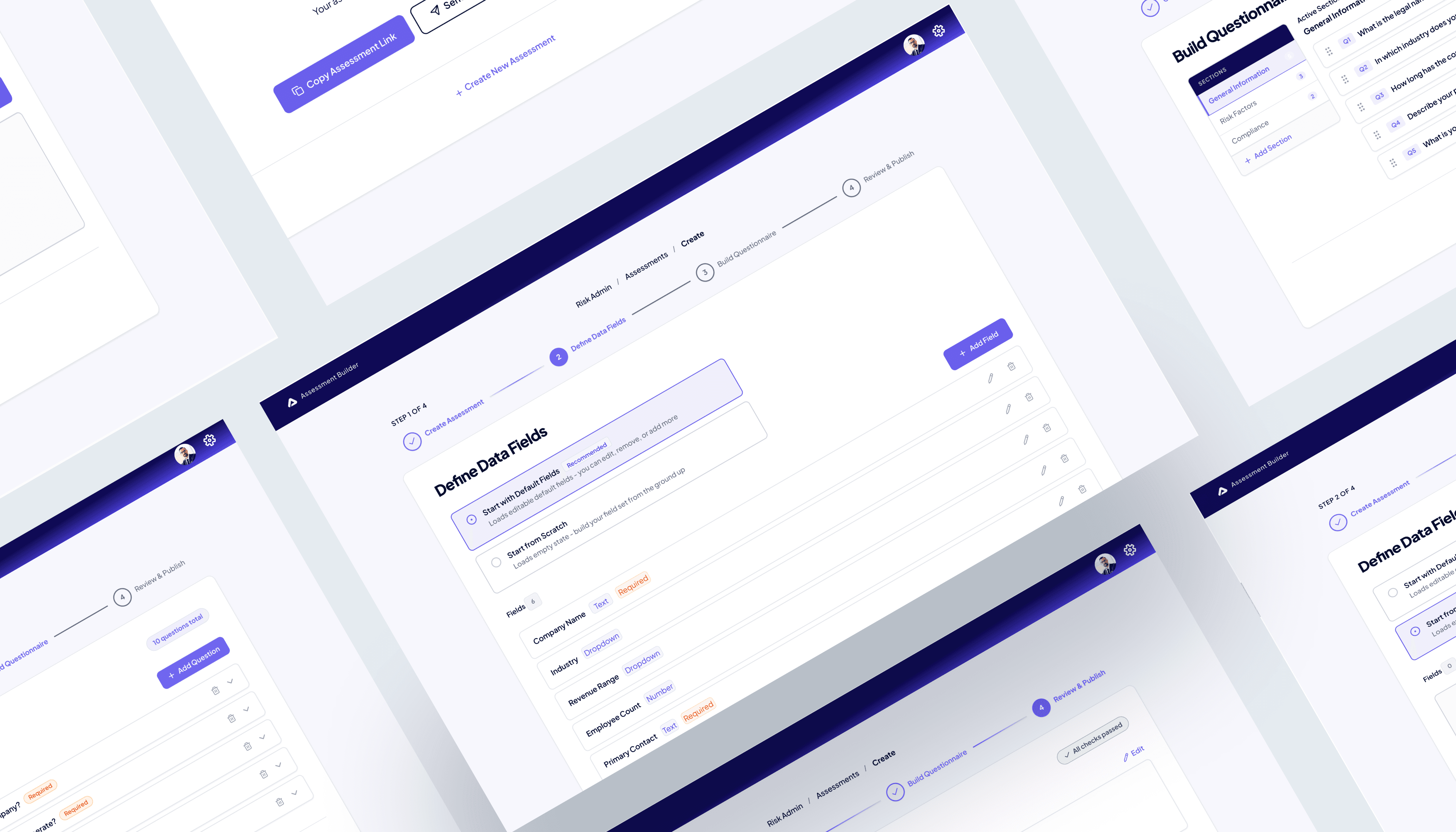
To design a flexible, user-friendly questionnaire builder that allows clients to create custom compliance assessments, reduce manual work, and ensure consistency across risk reviews.

Key Outcomes

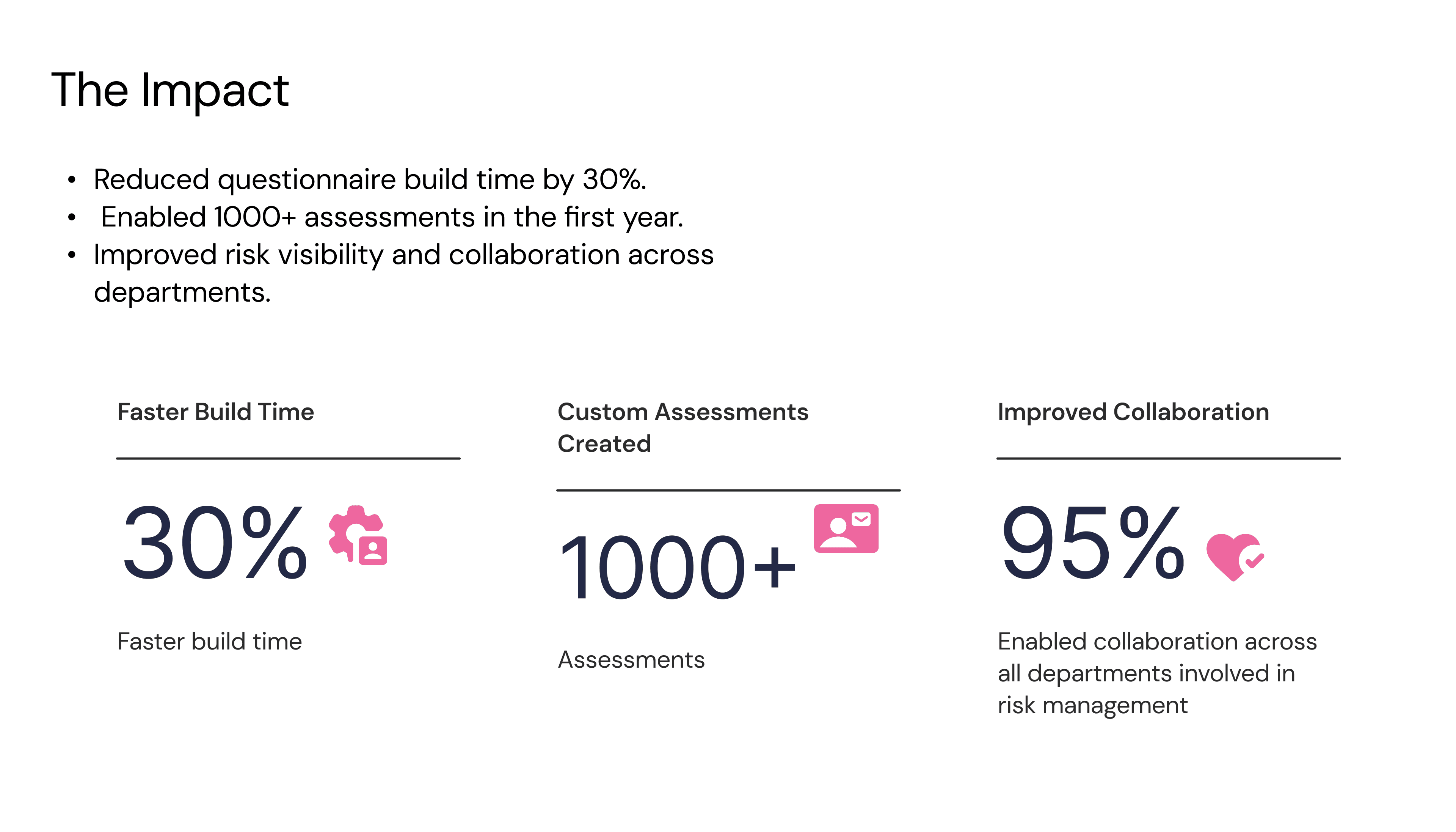
• Enterprise-ready modular assessment engine launched • 1,000+ assessments created in year one • 30% reduction in build time • Improved risk visibility across departments
Atom Logo
Atom Logo
Atom Logo

Impact

The tool became the foundation for managing compliance across all client accounts, significantly improving risk visibility and operational efficiency. It enabled faster third-party reviews, clearer accountability across departments, and laid the groundwork for additional automation in the platform.

Reflection

Balancing flexibility with usability was the primary challenge. Enterprise systems demand configurability, but excessive complexity can reduce adoption. If evolving this further, I would explore: • AI-assisted question recommendations • Automated risk scoring models • Industry-specific template libraries This project strengthened my systems thinking and enterprise product strategy skills.

Impact

The tool became the foundation for managing compliance across all client accounts, significantly improving risk visibility and operational efficiency. It enabled faster third-party reviews, clearer accountability across departments, and laid the groundwork for additional automation in the platform.

Reflection

Balancing flexibility with usability was the primary challenge. Enterprise systems demand configurability, but excessive complexity can reduce adoption. If evolving this further, I would explore: • AI-assisted question recommendations • Automated risk scoring models • Industry-specific template libraries This project strengthened my systems thinking and enterprise product strategy skills.